
Culturalism

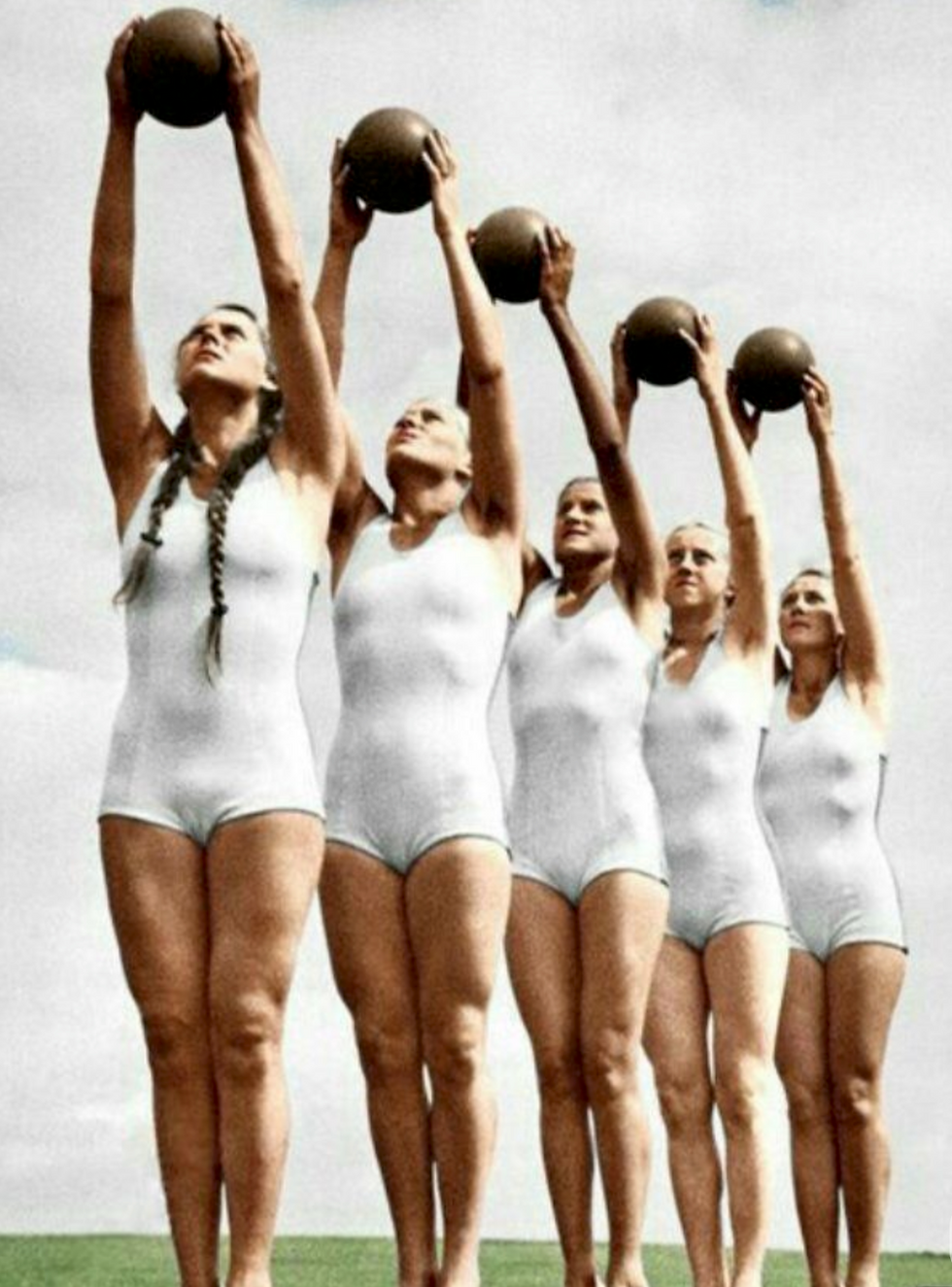
Victims and perpetrators of culturalism (Source: here)
Culturalism is the cultural equivalent of racism. Where racism prioritises one race over other races, culturalism places some people over others based on their cultural affiliations. Culturalism arises whenever members of a more powerful culture impose their values and customs on members of less powerful cultures.
In many countries, prescriptive culturalist practices are institutionalised through policies, laws, and regulations, which explicitly favour certain cultural practices, while discriminating against others. An obvious, if banal, example is the practice in most European countries of assigning the status of 'state religion' to one or other branch of Christianity, but not to non-Christian religions.
Culturalism is at least as widespread globally as racism was in the US South prior to de-segregation. It lies at the root of some of worst political excesses anywhere in the world, including identity politics, discrimination, xenophobia, degrading treatment and deportation of refugees to third countries, nonchalant acceptance that thousands of Africans drown in the Mediterranean Sea trying to cross into Europe every year, genocides, such as Gaza, and war.
When podcaster Konstantin Kisin said former British Prime Minister Rishi Sunak could never be English, because he is a "brown Hindu", Kisin was expressing a culturalist view. We also see culturalism in the Indian caste system and in Prime Minister Modi's overt sponsorship of Hinduism. We see it in the efforts of religious fundamentalists in the United States to ban abortion. We see it expressed in tribal tensions between Hutus and Tutsis in Rwanda and between Luos and Kikuyus in Kenya. We see it in the subordination of women in business and politics in almost every country in the world. We see it very prominently expressed in Zionism, which claims that members of the Jewish culture have a unique and exclusive right to land in and around present-day Israel, solely based on their membership of the Jewish culture (see here).
Yet, it only takes a moment of contemplation to recognise that culture-based claims to privilege are both arbitrary and non-sensical. Culture, like religion, is basically a postcode lottery. I have Danish cultural values, because I happen to be born in Denmark. Had I been born in Turkey my values would have been completely different, but they would have felt equally natural.
Of course, there are literally hundreds of cultures in the world and each one has its own unique customs and distinct underlying values. All these cultures are internally consistent, which is why they have lasted for so long. None can claim to be better than any other. They are just different. Each of us grew up inside one of these social constructs and most of us got so brainwashed along the way that we now believe our own values are the only legitimate ones. And why wouldn't we? Most of us have only ever lived in one culture after all.
Unfortunately, it is this asymmetry, which give rise to so many of the problems associated with culturalism. We have intimate knowledge of and close familiarity with our own culture, but we are almost completely ignorant of other cultures. Moreover, our ignorance of other cultures is tinged with suspicion, because our cultural identities were originally forged for defensive purposes. In the distant past long before we had rule of law, small human communities developed culture to form strong intra-community ties that helped them unite to fight off external threats. This is why we associate shared cultural values with trust and why we harbour suspicion of alien cultures.
It is therefore no wonder that humans so easily discriminate along cultural lines; it is literally how our communities survived for tens of thousands of years. Yet, this very basic and rather crude method of defence, which served us so well before the rule of law, is now obsolete; with rule of law in place we no longer need to rely on cultural affinity to be safe.
Unfortunately, this fact has not prevented populist politicians from exploiting the emotions to which our legacy of defensive culture still give rise with the right stimulation. The result: we have many policies that blatantly discriminate along cultural lines. Very few people even recognise our culture-based discrimination as anything other than natural and reasonable policies. It is precisely this near-universal obliviousness to its problems that makes culturalism not only the most widespread, but also the least recognised of all the major types of discrimination in the world today.
Despite the lack of recognition, every single hour of every single day countless political opportunists the world over work very hard to force cultural minorities to adopt customs and rules of dominant cultures, often against their will. We see these efforts expressed in bans on burqas imposed on Muslim women in France as well as in the proscription of burqas for Muslim women in Afghanistan. We see it expressed in demands from nativists that immigrants go home, because 'their kind' have no right to live in 'our' countries. Every day, culturalist politicians vilify perfectly ordinary, law-abiding immigrant families, who have come to the West with the sole aims of working and improving their lives; they are invariably portrayed as extremist fundamentalists hell-bent on turning Western societies into medieval hellscapes.
Scapegoating of cultural minorities is, of course, as old as the hills. It has featured in every pogrom, every genocide, every Apartheid system, every class system, every caste system. Surely, we all know where it leads? Well, no, it seems. It never fails to shock me many of us are completely ok with culture-based abuse in our own societies. The only rational explanation is that deep down many people still believe that being part of the majority culture gives them the right to dictate how others can live. The mindset that 'we' are allowed to lord it over 'them', since it is 'our' country and our culture was here first!
All of which makes culturalism a very dark side of culture. While culture brings us many delights, it also has a nasty role as a vicious tool for social control, as awful and unacceptable as racism, sexism, homophobia, and other types of discrimination based on people's features and preferences.
Culture, in my view, should not ever be a policy issue. Culture should be left as a choice for every one of us to take or leave as we see fit. Culture must also be free in order to evolve and thrive. And it must never be prescribed. There is not a single valid reason, why Western societies would need to prescribe culture; we have rule of law, human rights, and democracy, so as long as people obey the law, they should be free to live as they please.
To move forward from the current dismal state of affairs, we need a debate about culturalism. We need to face the facts that our imposition of cultural tyranny on minorities is real and has real victims. We need to confront the reality that cultural injustices are being committed and swept under the carpet. Indeed, it is even taboo in many societies to state that the dominant culture does not have an inherent right to dictate how cultural minorities should live. Ruthless political exploitation of asymmetric cultural education remains a huge problem.
I recognise that moral arguments about victims will not sway everyone, but to those who only care about themselves I say this: remember it is also in your narrow self-interest to get along better with people from other cultures. Western populations are shrinking due to falling birth rates and ageing populations, so our societies need more immigrants if we are to maintain current living standards. Besides, the world continues to get smaller whether we like it or not. Improvements in transport, communication, and income per capita are unstoppable. More and more of us will therefore come into contact with one another. Should we allow these ever-more frequent cross-cultural encounters to turn into clashes, or should we put them to better use?
Given the inexorability of globalisation, I firmly believe that tomorrow's winners will those who thrive in multi-cultural communities, while the losers will be those who cannot adapt to an ever-shrinking world. To make sure most of us end up on the winning side, we need to defeat culturalism, which means overcoming cultural information asymmetries. This will require investment in cultural awareness. As an economist, I never thought I would say this, but here goes: I see a great future for social anthropologists!
The End


Comments