
Central Pyrenees road trip


The refuge at Bujaluero (Source: own photo)
Early May is the shoulder season in the Pyrenees, so there are not many tourists. The skiing season is over, but it is not yet warm and dry enough to be sure of clement weather. Even so, this part of Spain is stunning and worth a visit any time of year.
Ordesa Valley is the main attraction in the central Pyrenees. The closest town of decent size is Aínsa, which boasts just over 2,000 inhabitants and cafeterías with croissants to die for. There is plenty of lodging inside the town and in the surrounding countryside.

Landscape north of Bujaluero (Source: own photo)
Being from Denmark, where the highest mountain is 169 meters over sea level, I did not learn to ski until the rather advanced age of 13-14 years. At the time, the thrill of skiing was the speed. As I got older, my fondness for speed was replaced by a general love of just being in the great outdoors. Today, what I enjoy the most about skiing is that skis give me access to mountains in winter. Without skis, how else would you enjoy remote and inaccessible mountains in winter?
Mountain biking gives me the same benefit, only in the seasons without snow. You move much faster on a mountain bike than walking, so you get to see far more in the time you have available, but you don't lose any of the intimacy with the environment. You have the flexibility to stop anytime, anywhere, even go off-road. And you get fit!
This morning I did a 23 kilometres mountain bike ride starting at the top of the Bujaluero Valley. The valley is situated about an hour and twenty minutes' drive north of Aínsa. You can reach Aínsa from Barcelona in just over three hours, but it worth taking twice that time to follow the scenic N-260 road, which traverses the Pyrenees from east to west.
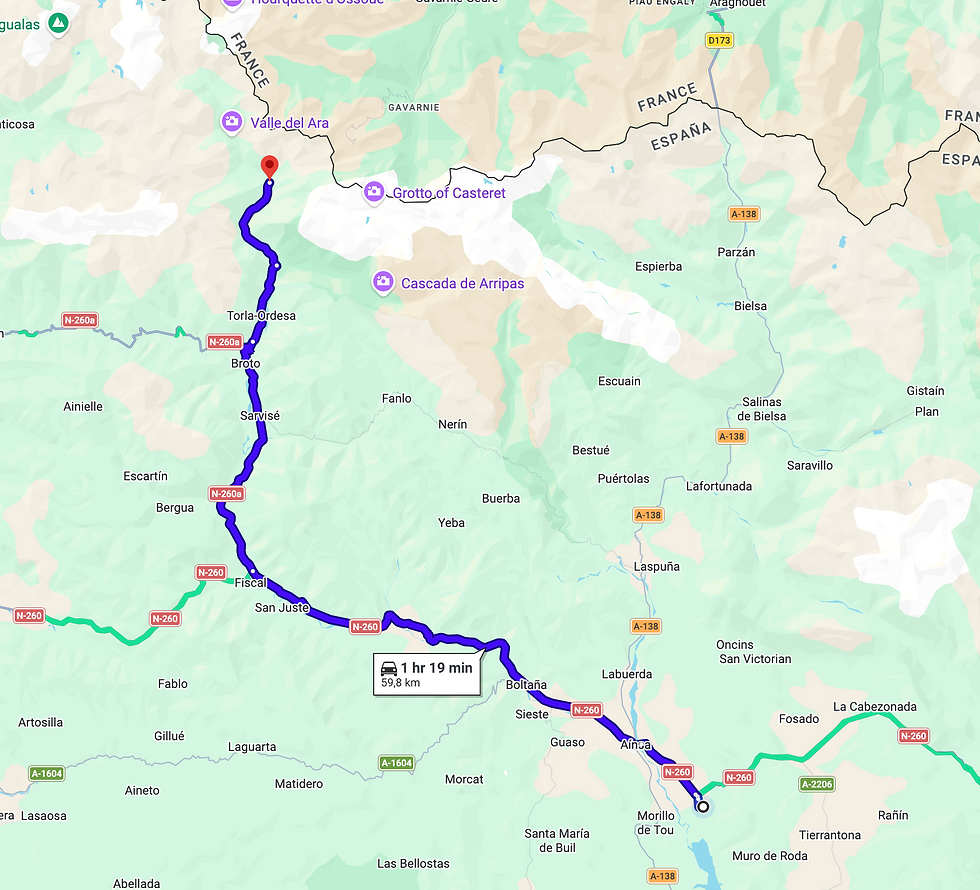
Aínsa to Bujaluero (Source: here)
From Aínsa, you head north to Torla and then, when the road splits, take the road less travelled to Bujaluero (the other road goes to the much more famous Ordesa Valley). At the top of the Bujaluero valley, there is a refuge and public parking. Get your bike out and start riding. You are very close to France. Soon after you leave, the valley splits into two lesser valleys, the Ordiso and the Otal.

23 kilometres through the Odiso and Otal valleys (Source: here)
As I was riding, I was wondering how the Pyrenees came about. It turns out that during the Pangea supercontinent phase, Iberia was nestled between the Euroamerican and Gondwana landmasses. Then some 126 million years ago, Iberia broke away from Europe and rotated counter-clockwise, creating the Bay of Biscay in the process. Eventually, Iberia re-collided with France some 100 millions year ago to form the Pyrenees.
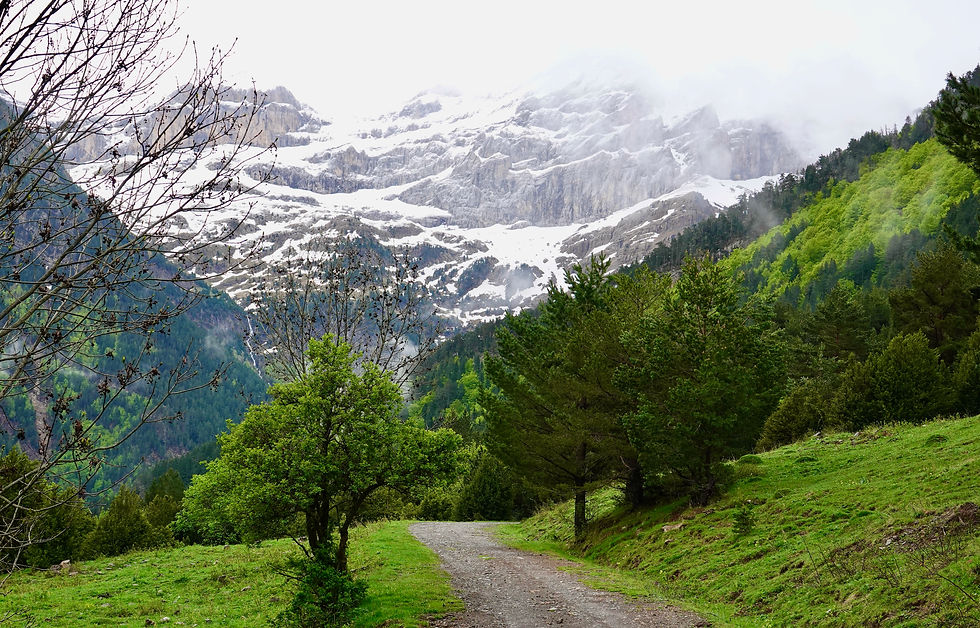
Steep ride up Ordiso (Source: own photo)
The ride is easy and rewarding. The path up Ordiso valley is stony dirt of good quality. After a steep section early on you are launched onto a wide plateau surrounded by impressive mountains. A stream meanders across the plateau. At the far end, you reach a refuge from which you can climb peaks of +3,000 meters if you are so inclined.
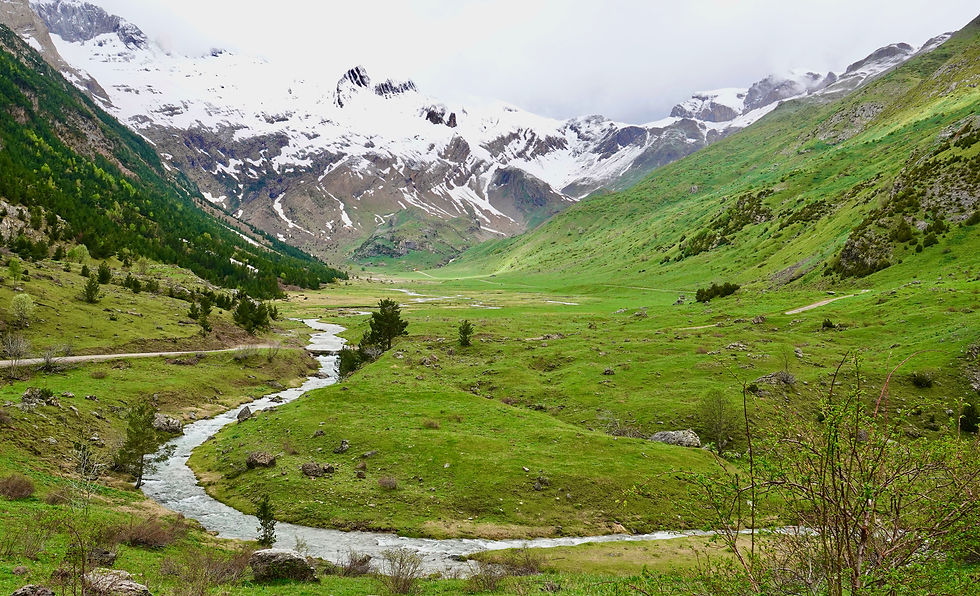
The plateau at the top of Ordiso (Source: own photo)

Otal valley (Source: own photo)
You return the same way you came, but before getting all the way back to the car take a left and head up the Otal Valley. Otal is lined with delicious green trees, which hug steep mountain sides. Far below, the icy, fast-flowing Ara river carves its way into the bedrock every second of every day. Even now.
The End


Comments